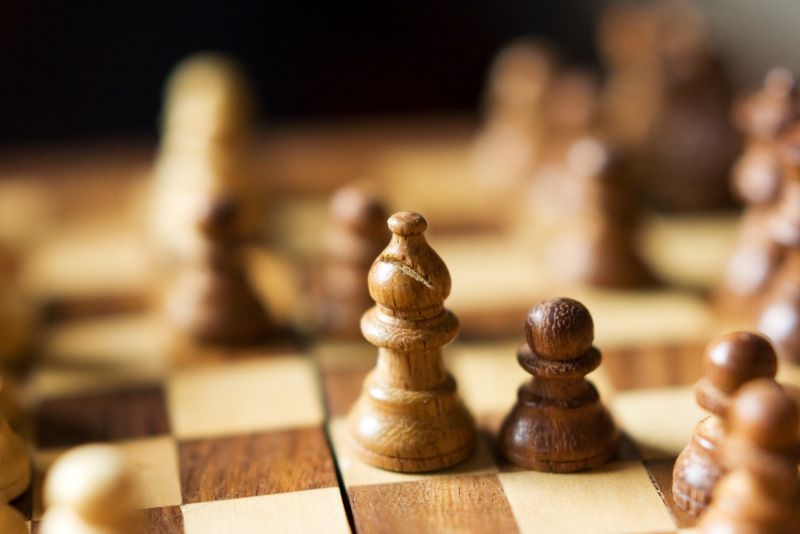
A grandmaster does not memorise thousands of positions square by square. They store patterns, and a team of researchers writing in Nature put the count at more than 100,000 of these memory chunks, built up over at least ten years of study. When a real game appears on the board, the grandmaster recognises the pieces in groups. When the pieces are placed at random, there is nothing to recognise, and the famous memory mostly disappears.
more
That second finding is the clearest proof of how the trick works.
A quarter of the pieces, from a glance
Shown a position from a real game only briefly, expert players can usually put back about a quarter of the pieces correctly. Amateurs manage about 5%. Professor Elbert, of the German team behind the Nature study, said the gap closes when the pieces are arranged randomly rather than taken from real games. On a nonsense board, the experts score like the amateurs.
So the skill is not a better camera. It is a larger library of positions that make sense, which the expert matches against what they see.
Two brains, two strategies
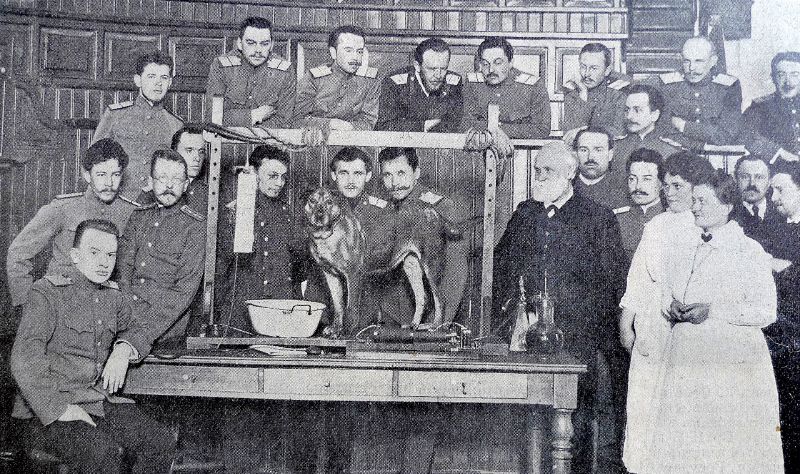
Elbert’s team tested 20 players, amateurs and grandmasters, against a chess computer, and recorded their brain activity with magnetic imaging. Only the grandmasters beat the machine or held it to a draw.
The two groups used their brains differently. The amateurs leaned on the medial temporal lobe, working hard to encode and analyse moves they had never seen. The grandmasters called up stored chunks of remembered games instead. “We didn’t expect such dramatic differences,” Elbert told BBC News Online, adding that the team had two independent people recheck the numbers.
The layout matters more than the pieces
A study from the University of Texas at Dallas, published on June 14 in the journal Memory and Cognition, pushed the question further. The researchers tested 14 members of the university’s chess team against 15 students of similar age and education who had never learned the game.
Each person saw a chessboard for three-tenths of a second, waited one second, then saw a second board and said whether anything had changed. Some trials used real chess pieces. Others swapped in unfamiliar symbols.
The chess players beat the novices at spotting when something had moved, even with the strange symbols. But when only the identity of a symbol changed and not its place, they did no better than the control group.
Dr Chandramallika Basak, the study’s corresponding author, said the players seemed to take in a board-like layout as one whole, “like the brain does with faces”. With five to eight pieces on the board, beyond the reach of ordinary attention, she reported an eight-item working-memory capacity for the experts.
A filing cabinet that works like a desk
Evan T. Smith, the paper’s lead author, compared working memory to what sits on top of a desk and long-term memory to what is filed in a cabinet. The standing theory, he said, is that chess players have sorted board positions so thoroughly that the filing cabinet behaves like the desktop.
That fits the German result. A position a grandmaster has met in some form before arrives already filed, which is why it can be read in a fraction of a second.
Can you train your way to it?
Elbert’s advice to would-be grandmasters was to start young and keep studying grandmasters’ games, much as a child learns a language. He added a caution. Knowing many words is not the same as speaking, and the way the chunks connect may, he speculated, be inborn.
Basak’s team named its next step: a functional MRI study to test whether the brain regions that handle faces also handle chess. If they do, the grandmaster’s gift may be less a feat of memory than a way of seeing.