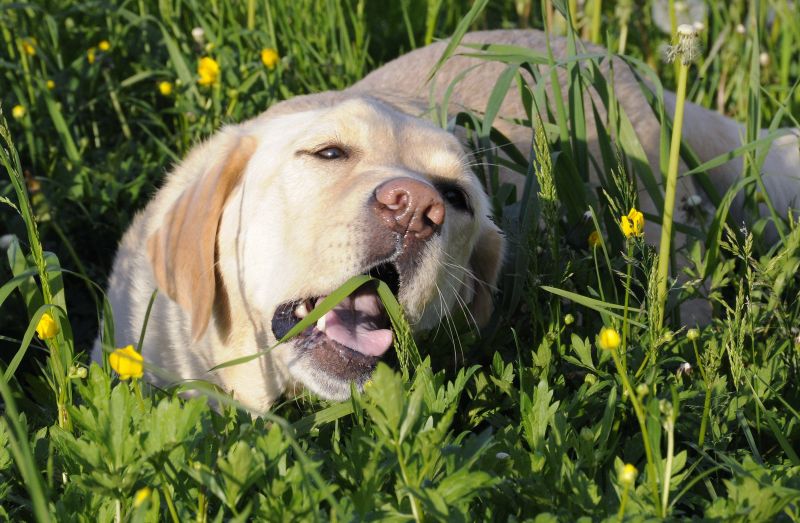
Nobody knows for certain why dogs eat grass. Dogs Trust, the UK dog welfare charity, says there are no firm answers, largely because the behaviour has had little research. What the research does show is that grazing is common and usually harmless, and that the popular explanation, a dog making itself sick to settle its stomach, is mostly wrong.
How common is it?
Very. BBC Bitesize cites a 2008 survey of 1,500 dog owners in which nearly 70% said their dog ate plant material daily or at least weekly. Puppies and younger dogs were especially likely to do it.
The stomach-ache theory
The belief that dogs eat grass to vomit or to calm an upset gut is a misconception, according to BBC Bitesize. The same 2008 survey found fewer than one dog in ten showed signs of illness before eating grass, and only a quarter were regularly sick afterwards.
Dogs Trust puts it more cautiously. It says there is no proof that grass directly causes vomiting, though a dog may still bring some up after a meal of it. If a dog regularly eats grass and then vomits, the charity says it could have an underlying stomach problem worth taking to a vet.
So why do they do it?
The two sources offer several likely reasons, none of them proven.
They like it. Dogs Trust suggests the plainest answer may be the right one, and that grass is simply on some dogs’ list of things that taste good. BBC Bitesize adds a detail about taste. Dogs have around 1,700 taste buds against roughly 9,000 in people, and some of theirs are tuned to water, so the moisture in grass may give it more flavour to a dog than to us.
Their ancestors did it. Dogs Trust points to research suggesting that eating plants was common among wild dogs, so the urge may be inherited. Dogs are omnivores, not strict carnivores, BBC Bitesize notes.
Their diet is short of fibre. A dog lacking fibre may seek out high-fibre food, according to BBC Bitesize. It gives a rough guide for a dog’s diet of 70% meat, 20% vegetables and plant material, and 10% offal, and advises choosing commercial food labelled “complete”.
They are bored. Both sources list boredom. A dog without enough mental stimulation may turn to grazing, chewing or digging, and BBC Bitesize suggests scent tracking, obedience work or a new trick as the remedy.
They are exploring, or they want your attention. Puppies learn about the world with their mouths and may nibble grass without swallowing it. Dogs Trust warns that rushing over every time a dog eats grass can teach it that grazing earns attention.
BBC Bitesize also mentions a suggestion from some researchers that dogs eat grass to shift parasites from the gut.
When to call the vet
Occasional grazing needs no action. Both sources list signs that it is time to talk to a vet:
- the dog eats grass obsessively, or a lot of it
- it keeps eating grass and being sick
- it eats grass but refuses its regular meals
- it also eats other things that are not food
- its toileting changes, such as constipation or diarrhoea
The grass itself is rarely the danger. Dogs Trust points out that snails and slugs spread lungworm, so grass they have crossed can carry a risk. Its advice is to keep vaccines and parasite prevention up to date rather than to stop the grazing.
Should you stop it?
You do not need to, Dogs Trust says. If you want to, it advises against shouting or telling the dog off, because that tends to cause fear and anxiety. Its alternatives are more exercise and mental stimulation, walks that keep the dog focused on you, treats and toys to redirect it, and practice with recall and “leave”.
Grass also causes a separate problem that has nothing to do with eating it. BBC Bitesize notes that some dogs are allergic to grass pollen, which can show up as itching, watery eyes, red inflamed patches or ear infections.