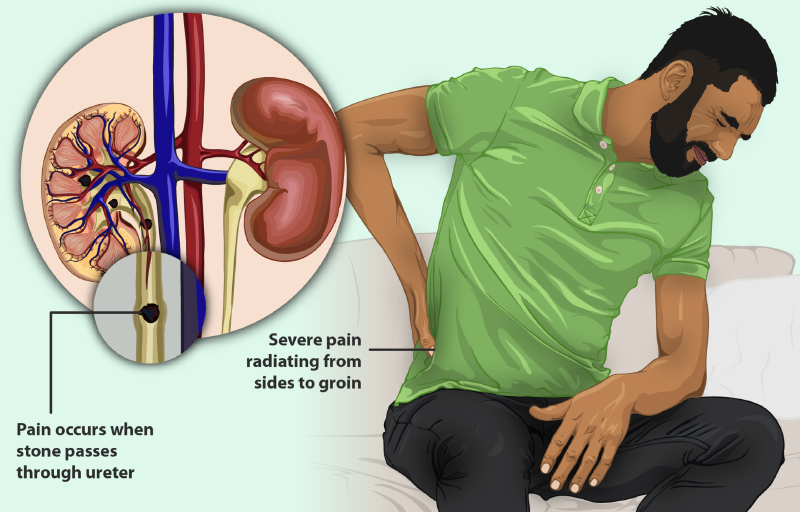
A kidney stone forms when urine carries too much of certain substances and too little water to keep them dissolved. Calcium, oxalate and uric acid are the usual culprits. Once there are too many particles for the liquid, they stick together into crystals, and the crystals grow into stones over months or years.
The US National Institute of Diabetes and Digestive and Kidney Diseases (NIDDK) makes the same point about minerals. Calcium, oxalate and phosphorus sit in everyone’s urine and cause no harm at low levels. Trouble starts when the levels climb.
more
How a crystal becomes a stone
Great Ormond Street Hospital describes stones as clusters of tiny crystals. Most are small enough to leave the body in urine without anyone noticing. Sometimes the clusters clump into larger ones that can block the kidney’s filters or lodge in the ureter or bladder.
Concentrated urine is what tips the balance. When urine gets too strong, often from dehydration, the share of each substance rises and crystals start to form. They can also form when the body makes too much of a substance or fails to clear it.
Size varies a great deal. Cleveland Clinic says a stone can be as small as a grain of sand or, rarely, bigger than a golf ball. A stone passing on its own can take up to three weeks.
What the stones are made of
Doctors name a stone after the crystal it contains. Cleveland Clinic lists four types:
- Calcium oxalate and calcium phosphate stones, the commonest kind, which can form on a diet high in oxalate or low in calcium, with too little fluid.
- Uric acid stones, linked to eating animal protein such as beef, poultry, eggs and fish.
- Struvite stones, which bacterial infections cause. Repeated infections can build a very large stone called a staghorn calculus.
- Cystine stones, caused by an inherited condition called cystinuria.
Water matters most
Dr Ivo Dukic, a consultant urological surgeon at University Hospitals Birmingham, told BBC Food that low fluid intake is the main risk factor. He advises people prone to stones to drink 2 to 2.5 litres of water a day.
A large American study puts a number on that. Pietro Manuel Ferraro and colleagues followed 192,126 people in three long-running cohorts of health workers. Over the follow-up, 6,449 of them developed a stone. Drinking too little fluid accounted for 26% of new stones, the largest share of any factor they measured.
What diet does
The same study looked at five habits that people can change:
- body weight
- fluid intake
- how closely they ate a DASH-style diet, rich in fruit, vegetables and low-fat dairy
- dietary calcium
- sugar-sweetened drinks
Together, those five accounted for more than half of new stones in each cohort. Sugary drinks had the smallest share, at 4.4%.
Salt is a problem because sodium makes the kidneys push more calcium into the urine, Dukic says. He counts more than 6g of salt a day as a major risk. For people who form calcium oxalate stones, he suggests keeping oxalate under 100mg a day. Spinach, rhubarb and almonds are among the high-oxalate foods he names.
Calcium itself is not the enemy. Dukic says it protects, because it stops oxalate being absorbed into the blood and passed into urine. He prefers food sources such as dairy to supplements. The Ferraro study also counted low dietary calcium as a risk factor.
Cleveland Clinic adds foods high in sodium or sugar, and vitamin C supplements, to the list of risks.
Other causes you cannot change
Genes play a large part. A twin study put the heritability of stone risk at 56%, the Ferraro paper notes. Cleveland Clinic lists a family history of stones as a risk, along with some diuretics, calcium-based antacids and some anti-seizure drugs. Gastric bypass and other gut surgery raise the risk as well.
Some medical conditions do too. Cleveland Clinic names high blood pressure, inflammatory bowel disease and paralysis.
Men carry a higher risk. Dukic says they are two to three times more likely to get stones over a lifetime. Cleveland Clinic says stones are most common in men in their 30s and 40s, and that about 1 person in 10 will have one.
Children get them far less often than adults. When they do, Great Ormond Street checks for an underlying cause, such as a problem with the urinary system’s structure or with metabolism. Children born prematurely, or with very limited mobility, are at higher risk.