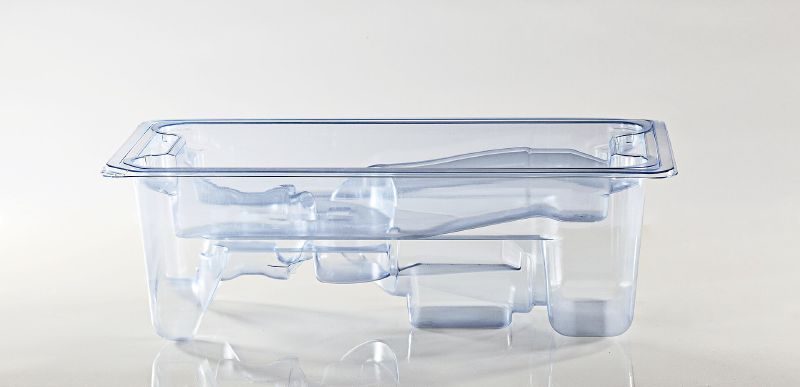
Packaging resists you because someone designed it to. A sealed plastic clamshell deters shoplifters. A tamper-proof seal shows that nobody opened the container before you did. Manufacturers told The New York Times as much when readers complained to the paper in 2010. The same shell that frustrates you at the kitchen table also protects the product, and it cuts down on bulky cardboard boxes.
more
Every year, around 6,000 people in the US end up in hospital after losing that fight, according to reporting by Seniors Guide’s Terri L. Jones. People arm themselves with scissors, knives and box cutters. The frustration even has a name: wrap rage.
Why does packaging fight back?
Readers who wrote to The New York Times in 2010 were not shy about it. Dylan Quinn told the paper the packaging on gifts and electronics “has reached the point of outrage,” complaining that ordinary scissors could not cut it and that a knife risked “disastrous consequences.”
The paper’s post pulled in more than 100 comments, including one from a reader who said they had spent 40 years in the plastics packaging trade. Their account covered most of what makes packaging tough. Plastic is lighter and cheaper than metal, paper or glass, and it survives transit with less breakage than any of them. A sealed shell also deters theft and lets a retailer fit more product onto the same stretch of shelf. Clear plastic lets a shopper see what they are buying before they pay for it, which the commenter said heads off later disputes over deceptive packaging. The same commenter said avoiding a lawsuit is the biggest reason ordinary scissors will not cut through the shell.
The same reader had a fix for the most common clamshell design. Bend the card’s corner back at the seam, known as the flange. The blister will usually come away from the card cleanly, sometimes leaving just the top layer of card behind.
The 1982 poisoning that started tamper-proofing
Tamper-proofing is not paranoia dressed up as packaging design. In 1982, someone laced Tylenol capsules with potassium cyanide and placed them on store shelves around Chicago, killing seven people. The case has never been solved. Packaging companies quickly made their containers tamper-proof afterwards.
Chronic illness meets a sealed blister pack
For someone managing a chronic illness, that same seal turns up at the worst possible moment. Migraine medication often comes in blister packs. A person mid-attack can struggle to push a pill through foil, let alone find scissors. Heidi Schwarz, a retired headache specialist who now works at the University of Rochester Medical Center, said doctors who prescribe the drugs rarely see how patients have to open them. “We don’t know how they are presented to patients,” she said.
The blister packs also have a history rooted in price. Migraine patient advocate Kerrie Smyres has traced it to cost. Triptans cost far more than most other drugs when they first went on sale, so manufacturers used blister cards to let pharmacies dispense them in smaller batches than usual. Melissa Arnold, an administrator for the site Migraine.com, said she often hears of people with arthritic hands or motor skill issues who struggle with medication packaging. A 2022 study led by Chou and colleagues found that packaging can shape how a patient feels about their whole course of treatment, not only whether they can open it that day.
Arthritis alone touches a large share of the people who ever have to open anything. Deb Gokie, who runs the Arthritis Foundation’s Ease of Use Program, points to the group’s own research: 72% of consumers said they would switch brands for packaging that gave them less trouble. The condition is not confined to older adults, either. Federal data puts arthritis at 7.1% of adults aged 18 to 44, rising to 30.5% between ages 45 and 64, and 50.4% among people 65 and over. Gokie said younger people with the condition struggle with the same jar lids and toy packaging as anyone else.
Bottle caps are shrinking, and grip is going with them
Clamshells are not the only culprit. Screw caps on milk, soda and water have quietly shrunk. Half-gallon milk carton caps have gone from 21 millimetres tall to 17, a fall of about 19%, said Min DeGruson, who directs the packaging programme at the University of Wisconsin-Stout.
Four millimetres sounds trivial. But Alaster Yoxall holds a professorship in packaging ergonomics at the UK’s Sheffield Hallam University, and he models the grip mathematically. The turning force a hand can apply depends on the friction between hand and plastic, how hard someone grips, and the cap’s radius. A shorter cap is also more likely to slip out of the hand.
The shrinking is not spite. It is weight, and the industry says so directly: a shorter cap uses less material, which trims both the shipping weight and the carbon footprint of getting a bottle to a shelf. Patrick Krieger, vice president of sustainability at the Plastics Industry Association, said weight is a large share of a package’s carbon footprint. That, he said, is part of why plastic replaced glass and metal in the first place. Rafael Auras, who chairs Michigan State University’s packaging sustainability programme, said there has been a strong incentive to cut container weight for decades. From 2005 to 2010, Walmart told its suppliers to cut packaging weight. A study by Oregon’s Department of Environmental Quality found that thinning a typical 13.3-gram water bottle and shrinking its cap cut the package’s carbon footprint by about 18%.
Retailers hear about the trade-off directly. Ben Yee, who directs processor partnerships at the California Milk Advisory Board, said retailers have seen customer complaints about the changes.
Getting in without cutting yourself
The tool that works best on a plastic clamshell is not a knife. Clamp an ordinary manual can opener onto the sealed edge, the way you would on a tin, and crank it around the seam. One reader who tried it told The New York Times it works around the plastic edges quickly. QSP Knife’s own guide to the method agrees: the opener cuts in a controlled way and leaves fewer sharp edges than scissors or knives.
If you use a blade, QSP Knife advises cutting away from yourself, with your free hand well clear. The Slice ceramic cutter can cut through a seal without much danger of cutting yourself.
None of this makes the seal feel any less unreasonable when all you wanted was a set of headphones. But the Arthritis Foundation’s own survey gives the industry a reason to fix it that has nothing to do with goodwill. Nearly three-quarters of shoppers say they would switch brands over packaging that gave them trouble.