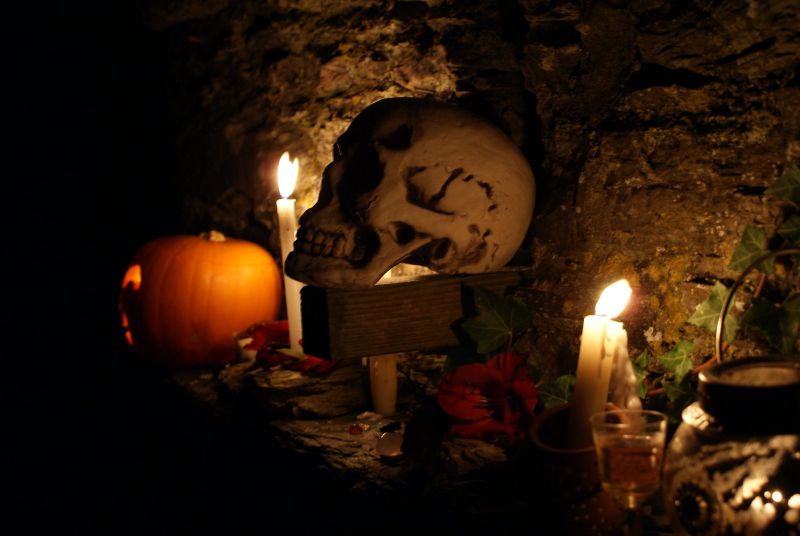
The pumpkin became America’s Halloween vegetable because Irish immigrants met it and liked the size. They arrived with a habit of carving lanterns from beets or turnips, and the pumpkin did the job better.
more
That is the story Modern Farmer tells. It does not cover how farmers came to grow pumpkins for the holiday, and neither does the second source. What both sources do cover is the lantern.
Where the carved lantern came from
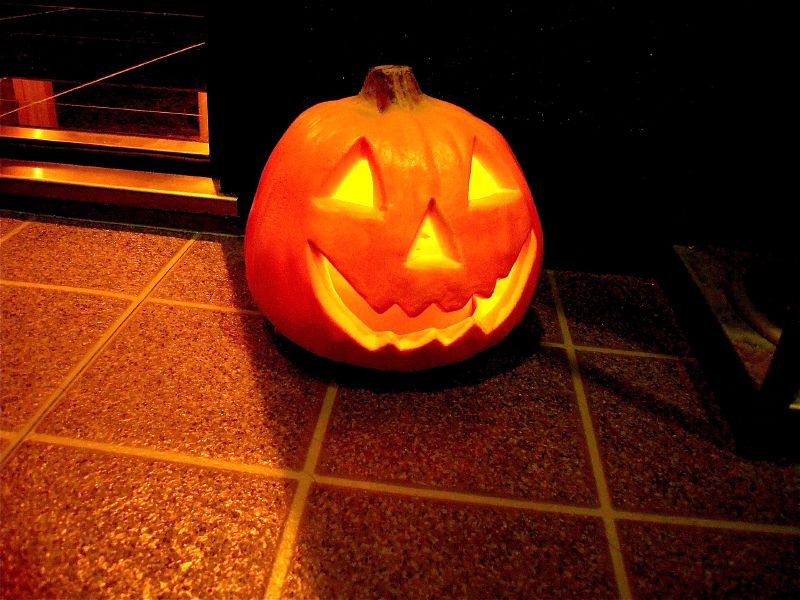
Carving a face into a root vegetable goes back to Celtic folklore, according to Great British Chefs. People set the lanterns in doorways and windows to keep evil spirits away. The belief was that the veil between the living and the dead was thinnest at Samhain, the festival Halloween grew out of.
Root vegetables suited the season. Households also used pumpkins and roots to decorate altars at Samhain, and the harvest left plenty to eat.
The name came with the habit. Irish immigrants called the lanterns jack-o’-lanterns, after a trickster named Jack, who fooled both God and the Devil. Neither would let him in, so Jack roamed the Earth with a light burning inside a turnip.
What the Irish found in America
The pumpkin was native to America, and it surprised the new arrivals. They could not get over how large it was and how much space it held once hollowed out.
When it came time to pick a vegetable for a candle, the pumpkin easily beat the turnip. Modern Farmer gives no date for the switch. It gives the first written link between jack-o’-lanterns and Halloween instead: an 1866 report in the Daily News, an Ontario paper.
Why the pumpkin became a target
Once it was the symbol, the pumpkin was also the thing to smash. Modern Farmer’s author admits the sources are thin here. Specific accounts of the pranks are absent from the literature, so the link between pranks and pumpkins is an assumption.
The wider record is clearer. A cartoon supplement to the St. Louis Post-Dispatch on 5 November 1899 showed boys as feeble villains. Their crimes were staying out at night, ringing doorbells and raiding sugar bowls.
Things darkened in the next century. Historian Lesley Pratt Bannatyne writes that by the 1920s, adults called the mischief “the Halloween problem”. Kiwanis and Lions clubs and parent-teacher associations tried to rebrand the holiday in the 1920s and 1930s. They pushed charitable acts such as raking leaves or giving food to the poor.
The campaign worked for a while, but the vandals came back. In 1996, Police Sergeant George Wheeler of Lawrence, Kansas, told the local paper that “a bunch” of kids were detained each year. Most went home to their parents.
A neighbouring tradition
Great British Chefs treats the pumpkin as one part of a larger Halloween table. The origin of trick-or-treating is hard to trace, it says. The writer thinks it likely began with souling, a Catholic custom, followed by Scottish guising. It became known as trick-or-treating in North America.
That order matters for the pumpkin. The carved lantern and the door-to-door visit arrived by different routes, yet they now share one night and one doorstep.
What the sources leave open
The lantern is the best-documented part of the pumpkin’s rise. Great British Chefs calls the pumpkin arguably the most recognisable symbol of modern Halloween. The sources give no acreage, sales figure or date for the shift from turnip to pumpkin, so this article gives none.
The next question is a commercial one: when farmers started planting for October. For that, you need a source on farming rather than folklore.