The cats.org.uk blog says a cat that licks you is most likely trying to form a close bond with you. PetMD adds a caveat: scientists have not fully worked out why cats lick people, so every explanation is a theory.
more
Where does the licking come from?
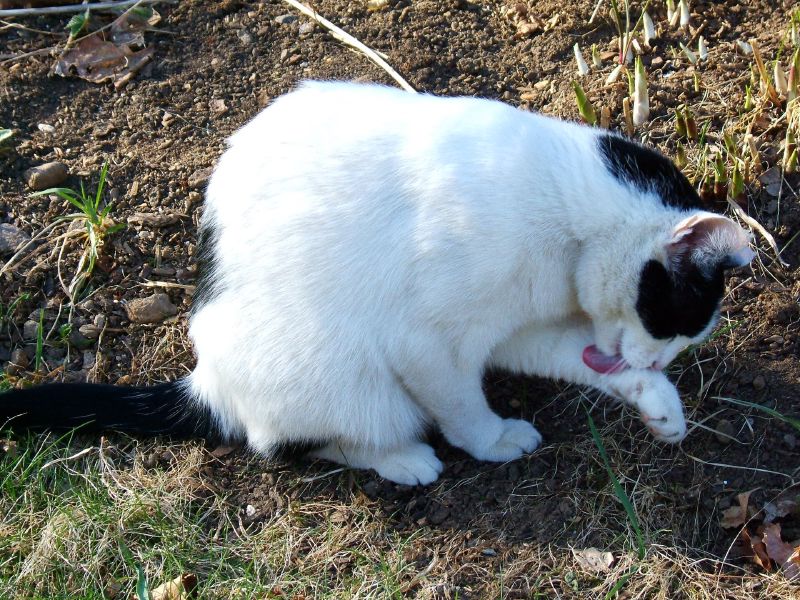
Grooming fills a large part of a cat’s day. Pamela Perry, a resident in animal behaviour at Cornell University’s College of Veterinary Medicine, puts it at 30 to 50 percent. National Geographic, reporting a study in the journal PNAS, says cats spend up to a quarter of their waking hours cleaning their fur.
Webvet says cats that live together and feel close groom each other. The behaviour has a name, allogrooming, and cats usually focus on the head and neck, where a cat cannot easily reach. PetMD says the grooming strengthens social bonds between cats.
Not every lick between cats is friendly, though. BBC Newsround reports a 2026 study by the researcher Morgane Van Belle, who watched videos of 106 cats. She found that cats may use licking to annoy or intimidate another cat, and calls it a subtle way of resolving conflict without a fight.
Your cat may be extending the grooming habit to you. The Refined Feline notes that mother cats groom their kittens from birth, which ties licking to care from the first days of life. When a cat licks you during a calm moment, say curled in your lap, CatPedia reads it as a sign the cat feels safe with you.
The same article is careful not to overstate it. CatPedia says allogrooming does not mean your cat thinks you are another cat, or that a lick is a declaration of love in the human sense.
Is your cat marking you?
Possibly. The cats.org.uk blog explains that saliva makes a bonded cat smell familiar, which tells the other cat, with one sniff, that it belongs to the group. It suggests your cat could be marking you as safe in the same way.
The Vet Desk notes that cats carry scent glands and make pheromones, chemical signals they use to claim things as theirs. The Refined Feline says cheek rubbing on your legs does a similar job.
Do you just taste good?
Sometimes, according to CatPedia, which lists salt from sweat, food traces on your fingers and scented lotions as draws.
The sources do not agree on how much weight to give this. The cats.org.uk blog says a lick is probably not about tasting like a favourite meal. The Vet Desk calls taste an unlikely main reason, especially if the licking continues after a couple of samples.
A tasty skin product carries a real risk. CatPedia names minoxidil and fluorouracil cream as medications that can seriously harm a cat in the smallest dose. It says to call a vet or the ASPCA Animal Poison Control Center if your cat licks treated skin. PetMD tells owners not to let a cat lick them after applying a topical product.
Why does a lick turn into a bite?
Catster says a cat that has had too much petting can show what it calls petting-induced aggression, and warning signs include dilated pupils, turned-back ears and a flicking tail. The cats.org.uk blog says cats sometimes lick people who are handling them when they don’t want to be, and may then bite or scratch. Its advice is to leave the cat alone if the tail swishes or the ears pin back.
The Vet Desk offers a gentler explanation. It says cats use their small front teeth to nibble itchy or dirty patches on their own coats, and may do the same to you. It calls this nibbling painless and different from an actual bite.
Why can it feel like sandpaper?
National Geographic reports that a cat’s rough feel comes from tiny spines on its tongue, called papillae. A team at Georgia Tech scanned them and found they curve backwards and have hollow tips, which wick saliva down to the skin. “A cat tongue works like a very smart comb,” the bioengineer David Hu told National Geographic.
Smithsonian Magazine adds that the spines lie flat at rest, and the cat raises them when it grooms. The Refined Feline says they are made of keratin, which also forms human fingernails.
That explains the scratch. The Vet Desk warns that repeated licking in one spot can leave human skin red and sore.
When should you worry?
Occasional licking during a cuddle is normal. Webvet advises a vet visit if the licking suddenly increases, turns compulsive, or arrives with hiding or a change in appetite.
Cornell’s vets explain why a cat may over-groom itself. William Miller says cats lick when an area is itchy or painful. Perry says a house move, the arrival or loss of another pet, or even a change of schedule can make a cat anxious. She adds that licking can then calm the cat and turn into a habit. The Refined Feline lists nausea, pain, stomach upset and dental problems as medical causes of extra licking.
Licking can also be a request. PetMD notes that owners often reward a lick by talking or petting, which teaches the cat that it works. The cats.org.uk blog adds that licking releases endorphins, so the habit feels good to the cat.
Is it safe to let your cat lick you?
For most people the risk is low, according to a 2023 article in the Guardian on diseases people catch from pets. It says Pasteurella bacteria often live in the mouths of dogs and cats, and that pregnant people and those with weakened immune systems face greater risk. It advises against letting pets lick your face or open wounds. PetMD rates the chance of catching a disease as very rare.
How do you slow it down?
Do not punish the cat. PetMD and the cats.org.uk blog both say scolding or pushing a cat away can raise its stress. PetMD also advises against squirting water or using bitter sprays.
Offer something else instead. The cats.org.uk blog suggests a favourite toy, or a brush, which the blog says cats prefer to being licked back. If the licking continues, PetMD suggests walking away when it starts and rewarding the cat with praise or play when it stops. For a cat that licks from stress, Perry at Cornell recommends ten to 15 minutes of play each day.